
Immune Regulation Beyond the Concept of “Strength”
In modern biomedical science, one of the most rapidly evolving areas of interest is the understanding of immune regulation not as a simple defense mechanism, but as a highly coordinated system of cellular communication. Increasingly, researchers are recognizing that many chronic health conditions cannot be fully explained by immune “strength” alone. Instead, they may involve deeper disruptions in immune signaling, cellular coordination, and inflammatory resolution pathways.
For decades, public health narratives surrounding immunity have largely emphasized the idea of “boosting” immune function. This has shaped both consumer health behavior and supplement culture worldwide. However, modern immunology is gradually revealing a more complex biological reality in which immune health depends less on intensity and more on regulation, balance, and resolution capacity.
The immune system functions as a highly adaptive and tightly regulated biological network composed of immune cells, cytokines, inflammatory mediators, metabolic signals, and tissue repair mechanisms that must continuously interact to maintain physiological balance. This system is not static, but dynamically responsive to environmental and internal cues, ensuring that immune activation and resolution are appropriately coordinated.
This concept of immune flexibility is strongly supported by modern immunology, which emphasizes that immune responses are governed by context-dependent cellular programs rather than fixed functional states. [1]
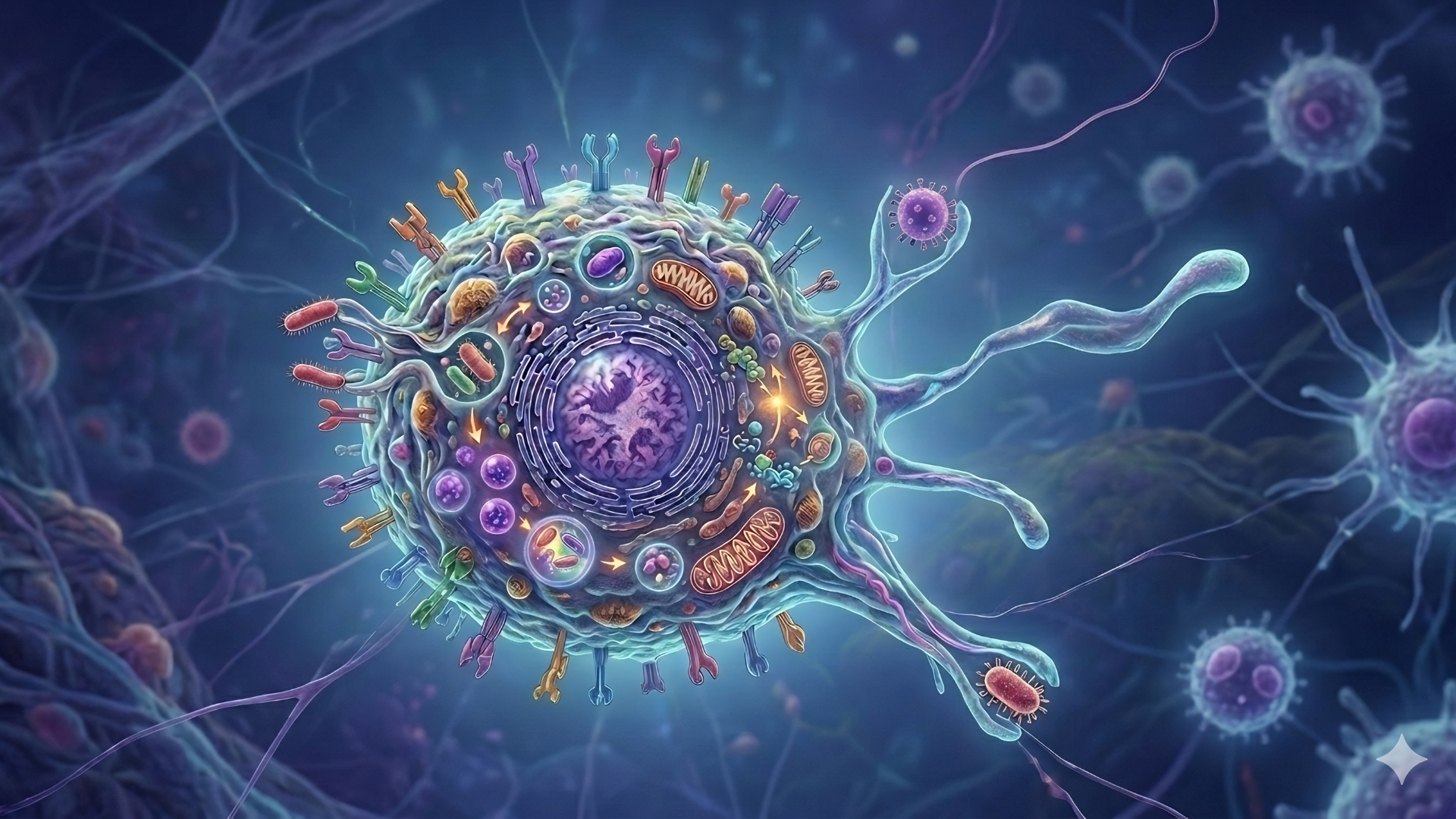
Within this regulatory framework, macrophages are recognized as highly plastic and functionally diverse cells of the innate immune system. Rather than serving only as pathogen-clearing “clean-up” cells, they play central roles in immune surveillance, inflammatory regulation, tissue remodeling, and the orchestration of repair processes. Their functional phenotype is not fixed, but instead shifts along a spectrum in response to microenvironmental signals.
As highlighted in contemporary immunology research, macrophages can exhibit both protective and pathogenic roles depending on their activation state and tissue context, positioning them as key regulators of immune balance and inflammatory outcomes. [1]
“Macrophages represent a central regulatory hub in innate immunity, integrating environmental cues to coordinate inflammatory and reparative responses.” [2]
Macrophages as Central Coordinators of Immune Function
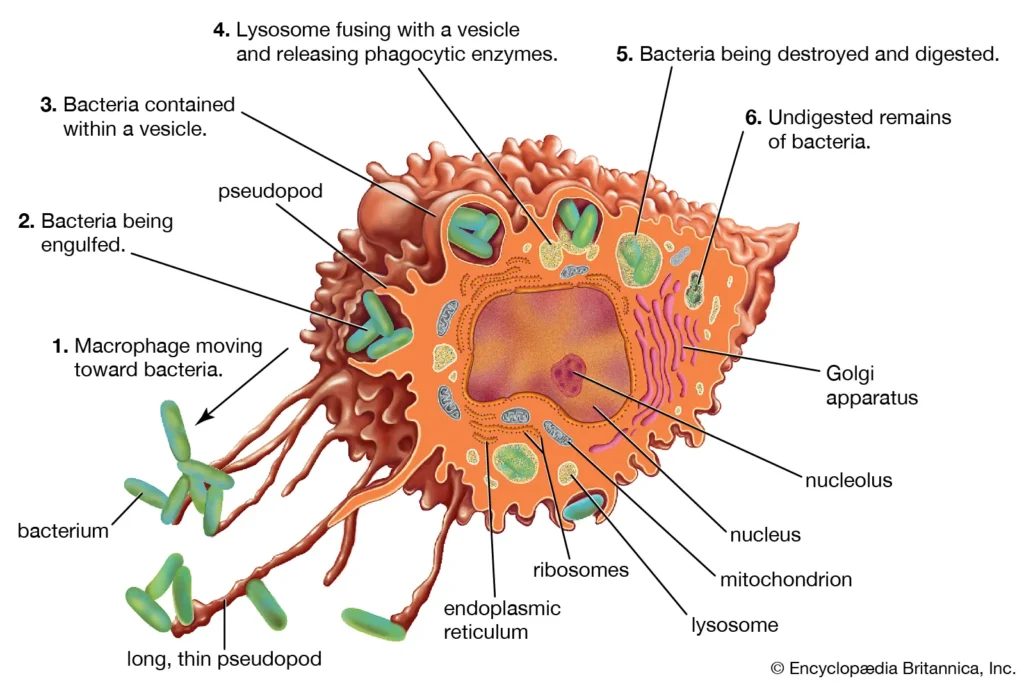
Although macrophages are often described in simplified terms as “clean-up cells,” their biological role extends far beyond pathogen clearance. In reality, they function as highly intelligent immune coordinators capable of influencing inflammation, metabolic signaling, tissue repair, and broader immune system adaptation.
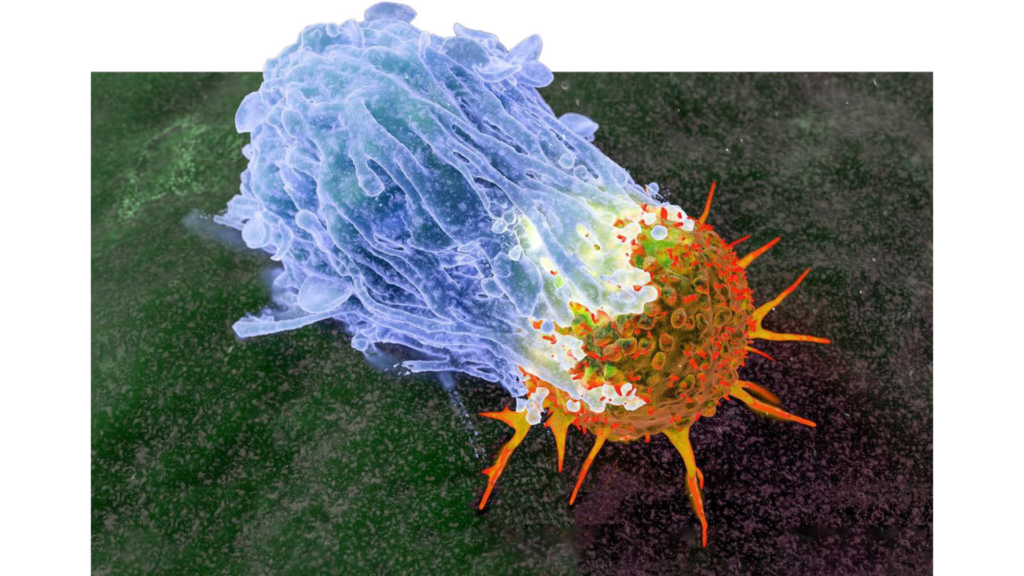
The term macrophage originates from Greek, meaning “large eater,” reflecting their phagocytic ability to engulf pathogens and cellular debris. Yet modern research has shown that their function is not limited to destruction or clearance. Instead, macrophages actively participate in cytokine signaling networks and help regulate communication between innate and adaptive immune systems. [3]
In healthy physiology, macrophages help maintain tissue stability by responding proportionately to threats and subsequently resolving inflammation once repair processes begin. This balance is essential because excessive immune activation may damage healthy tissue, while insufficient activation may compromise immune defense and clearance mechanisms. [4]
“Immune homeostasis depends not on maximal immune activation, but on tightly regulated immune responsiveness and resolution mechanisms.” [4]
Increasingly, chronic inflammatory conditions are being understood not merely as excessive immune activation, but as a failure in the body’s ability to properly resolve inflammation after an immune response has been initiated. [5]
This conceptual shift has become central to modern functional medicine and systems biology, where health is increasingly defined by regulatory balance rather than isolated symptom suppression.
GcMAF and the Concept of Immune Modulation
Within this broader scientific context, GcMAF (Gc protein-derived Macrophage Activating Factor) has been investigated as a macrophage-related immune modulation factor associated with immune regulation and inflammatory signaling pathways. [6]
GcMAF is generally discussed in scientific literature not as a conventional immune stimulant, but rather as a potential immune modulator. This distinction is important because modern immunology increasingly recognizes that indiscriminate immune activation may contribute to inflammatory burden rather than physiological benefit.
Instead of simply “enhancing immunity,” current scientific thinking is moving toward the concept of immune intelligence, where proper signaling, controlled activation, and efficient resolution are considered essential for long-term health stability.
GcMAF-related research has therefore been explored primarily within experimental and translational contexts related to macrophage responsiveness, inflammatory regulation, and immune signaling modulation. However, it is important to note that while macrophage biology and immune regulatory pathways are well established within modern immunology, the broader clinical applications of macrophage-modulating interventions such as GcMAF remain an evolving area of scientific investigation requiring further validation. [7]
Inflammation, Immune Dysregulation, and Modern Disease Patterns
One of the defining features of modern chronic disease research is the increasing recognition that low-grade chronic inflammation plays a central role in a wide range of long-term health conditions. [8]
Unlike acute inflammation, which is protective and short-lived, chronic inflammation may persist silently over time and gradually disrupt normal physiological regulation. This prolonged inflammatory state has been associated with cardiovascular disease, metabolic dysfunction, accelerated biological ageing, neurodegenerative disorders, and immune dysregulation. [8]
Lifestyle Factors
Modern lifestyle factors may significantly contribute to this process. Chronic psychological stress, sleep disruption, sedentary behavior, environmental toxins, oxidative stress, and highly processed diets can all influence inflammatory signaling pathways and immune regulation over time. [9]
Macrophages remain central to this process, as their functional state is highly responsive to environmental and metabolic signals. Depending on physiological conditions, they may either promote inflammatory activity or support tissue repair and resolution pathways. [2]
“Immune responses are deeply integrated with metabolic and environmental sensing systems, forming a unified network of physiological regulation.” [9]
This systems-level understanding has become one of the foundational principles of modern functional medicine, where immunity is no longer viewed in isolation but as part of an integrated biological network involving metabolism, endocrine function, and cellular signaling.
Emerging Research: Macrophage Activation and Cognitive Health
In recent years, scientific interest in macrophage regulation has expanded beyond traditional immunology into neurological and cognitive health. Researchers are increasingly exploring how chronic inflammation and immune dysregulation may contribute to brain ageing, neurodegeneration, and cognitive decline. [10]
Within the central nervous system, microglia serve as the brain’s resident immune cells and function in a manner similar to macrophages. They are involved in immune surveillance, inflammatory regulation, synaptic remodeling, and clearance of cellular debris. Under healthy conditions, microglia support neurological homeostasis and repair processes. However, chronic activation may contribute to neuroinflammatory imbalance and impaired cognitive resilience. [10]
This relationship between immune function and cognitive health has gained increasing scientific attention, particularly as chronic inflammation is now recognized as a contributing factor in age-related neurological decline.
A recent clinical study published in Nutrients investigated the effects of dietary intervention combined with macrophage-activating factor supplementation in elderly outpatient rehabilitation participants. The researchers observed improvements in cognitive screening outcomes in the intervention group over time, alongside discussions on immune regulation and inflammatory balance in the ageing brain. [10]
“Microglia and macrophage-related immune pathways may influence inflammatory balance and cognitive function during ageing.” [10]
Although exploratory in nature and limited in scale, this study reflects a growing scientific interest in the relationship between immune modulation and cognitive ageing.
Systems Biology and the Future of Immune Intelligence
The growing body of research surrounding macrophage biology and immune modulation reflects a broader transformation occurring in modern healthcare. Increasingly, medicine is shifting away from symptom-based intervention models toward systems-level understanding of physiological regulation.
In this emerging framework, health is defined not simply by the absence of disease, but by the presence of coordinated biological communication. Immune cells must respond appropriately to environmental challenges, inflammation must resolve efficiently, and tissue repair processes must function in a balanced and regulated manner.
Macrophages sit at the center of this regulatory system, integrating signals from metabolic, immune, and environmental inputs to maintain physiological stability.
GcMAF-related research represents one part of this broader scientific exploration into immune intelligence and cellular communication. It reflects a fundamental shift in biomedical thinking: long-term health depends not only on immune activation, but on immune regulation, coordination, and resolution capacity.
Ultimately, the future of medicine may be defined less by how strongly the immune system can respond, and more by how precisely it can regulate, adapt, and restore balance at the cellular level.
Author Note
This article is intended for educational and informational purposes only. It explores scientific and functional medicine perspectives related to macrophage biology, immune regulation, and cellular signaling pathways. It does not constitute medical advice, diagnosis, or treatment. GcMAF remains an area of ongoing scientific investigation, and clinical applications are not universally established. Readers should consult qualified healthcare professionals for medical concerns.
REFERENCES
[1] Murray, P. J., Wynn, T. A. Macrophage plasticity in immunity and inflammation. Nature Reviews Immunology.
https://www.nature.com/articles/nri.2014.28
[2] Gordon, S., Martinez, F. O. Alternative activation of macrophages. Immunity.
https://www.cell.com/immunity/fulltext/S1074-7613(10)00173-1
[3] Abbas, A. K., Lichtman, A. H. Cellular and Molecular Immunology. Elsevier.
https://www.elsevier.com/books/cellular-and-molecular-immunology/abbas/978-0-323-47978-3
[4] Medzhitov, R. Origin and physiological roles of inflammation. Nature.
https://www.nature.com/articles/nature10804
[5] Serhan, C. N. Pro-resolving lipid mediators in inflammation resolution. Nature.
https://www.nature.com/articles/nature13479
[6] Uto, T. et al. GcMAF reduces inflammatory cytokine production through macrophage modulation. Anticancer Research.
https://ar.iiarjournals.org/content/35/8/4487.long
[7] Wynn, T. A., Vannella, K. M. Macrophages in Tissue Repair, Regeneration, and Fibrosis. Immunity.
https://doi.org/10.1016/j.immuni.2016.02.015
[8] Furman, D. et al. Chronic inflammation in disease across the lifespan. Nature Medicine.
https://www.nature.com/articles/nm.4489
[9] Hotamisligil, G. S. Inflammation and metabolic disorders. Nature.
https://www.nature.com/articles/nature05485
[10] Uchiyama-Tanaka, Y. et al. (2024). Nutrients, 16(13), 2078. https://doi.org/10.3390/nu16132078