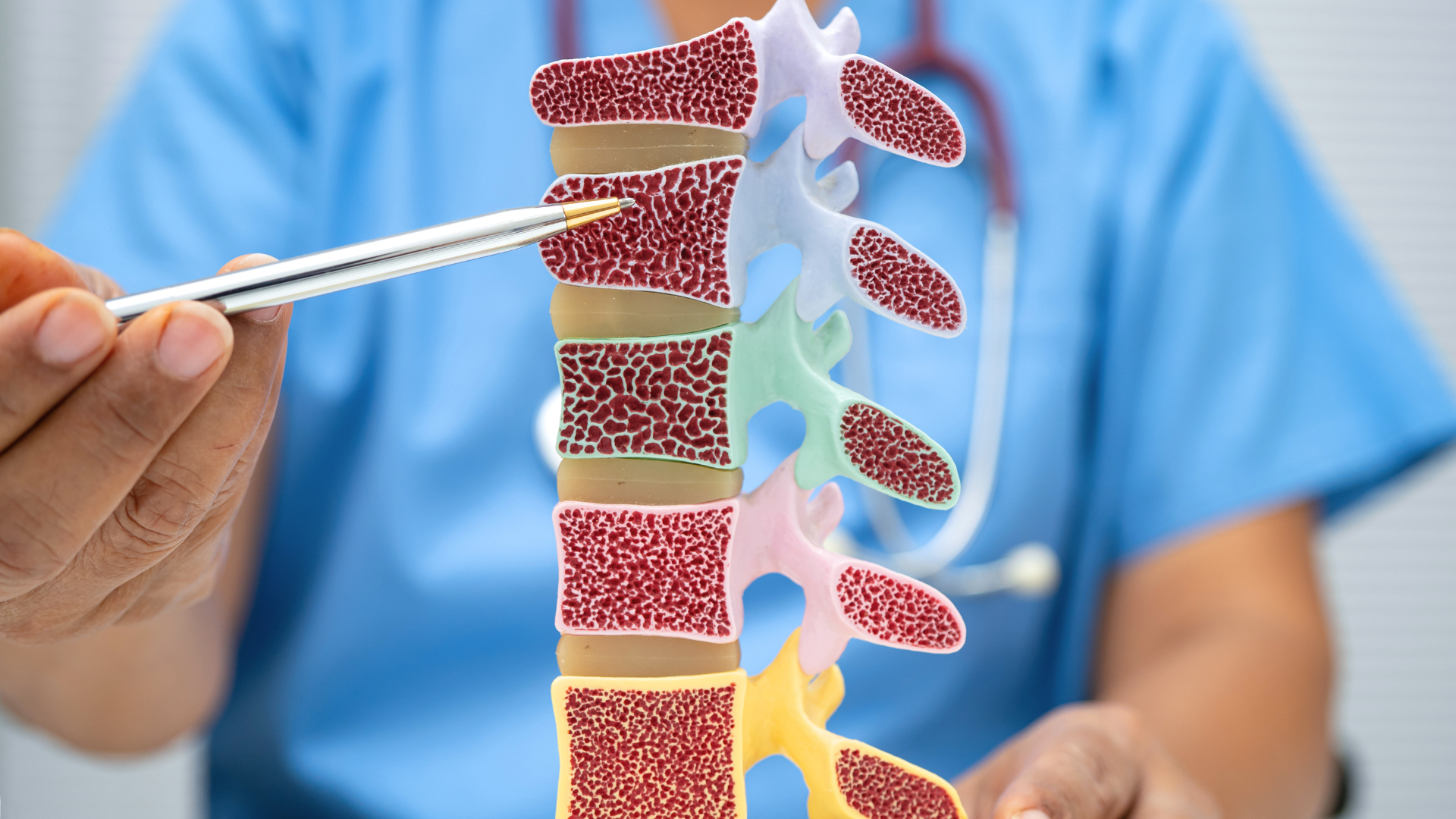
For decades, calcium has been viewed as one of the foundations of healthy aging. It has long been associated with strong bones, fracture prevention, and osteoporosis support, leading millions of people worldwide to increase their calcium intake through supplements, fortified foods, and wellness products.[1][2]
But modern science is beginning to paint a more complicated picture.
Researchers are increasingly exploring how calcium behaves inside the body beyond the skeleton alone. Questions surrounding absorption, bioavailability, nutrient regulation, vascular calcification, and metabolic balance are now becoming central to the conversation.[3][5] In many cases, the issue may not simply be whether a person consumes enough calcium, but whether the body is absorbing, regulating, and distributing it properly.
This shift has led to a growing realization within nutritional science: nutrients do not function in isolation. Calcium depends on a broader physiological network involving vitamin D, magnesium, vitamin K2, digestive health, kidney regulation, hormonal signaling, and cellular metabolism.[1][2]
This editorial explores the evolving science behind calcium metabolism, the growing debate surrounding supplementation, and why the future of nutritional health may depend less on dosage alone and more on biological regulation itself.
“The body does not simply need calcium. It needs the ability to use calcium correctly.”
The mineral that became a symbol of healthy aging
Walk into almost any pharmacy today and calcium is everywhere. It appears in bone-health formulas, multivitamins, fortified beverages, wellness advertisements, and supplements marketed toward aging populations.
For years, the public message surrounding calcium has remained remarkably consistent: more calcium supports stronger bones and healthier aging.[1]
It is an idea that became deeply embedded within modern health culture.
Yet over time, researchers began noticing contradictions that challenged this seemingly straightforward narrative. Some individuals consuming large amounts of calcium continued developing osteoporosis or declining bone density. Others showed signs of calcium accumulation within arteries, kidneys, or soft tissues despite following supplementation routines specifically intended to support long-term skeletal health.[5]
These observations gradually shifted scientific attention toward a more complicated question.
What if calcium intake alone is only one small part of the story?
That question has helped reshape how many researchers now think about mineral metabolism and long-term health. Increasingly, scientists are realizing that calcium’s effectiveness depends not only on how much enters the body, but also on how efficiently the body absorbs, regulates, transports, and ultimately utilizes it.[3]
In other words, the conversation is moving beyond calcium itself and toward calcium behavior inside the body.

Calcium’s role extends far beyond bones
One of the most common misconceptions surrounding calcium is the assumption that it exists primarily for skeletal support. In reality, calcium participates in some of the body’s most essential biological functions.[1]
Although the majority of the body’s calcium is stored within bones and teeth, a smaller circulating fraction continuously supports nerve transmission, muscle contraction, cardiovascular regulation, hormonal signaling, enzyme activation, and cellular communication.[1][2]
Even slight disruptions in calcium balance can affect multiple physiological systems simultaneously.
Because calcium is so biologically important, the body regulates it with extraordinary precision.
This regulation involves an interconnected network that includes vitamin D, magnesium, phosphorus, kidney function, digestive health, and parathyroid hormone activity.[1][2] More recently, vitamin K2 has also attracted increasing scientific interest because of its proposed role in helping guide calcium toward bones rather than soft tissues.
The result is a system that is far more dynamic than most people realize.
Calcium metabolism is not simply determined by intake. It is determined by absorption efficiency, nutrient synergy, metabolic regulation, and biological placement throughout the body.[3]
“More calcium does not necessarily mean better calcium utilization.”
This distinction has become increasingly important as researchers continue studying the relationship between calcium balance, aging, cardiovascular health, and chronic disease.[5]
The growing concern surrounding misplaced calcium
Modern research has increasingly focused on a phenomenon sometimes described as soft tissue calcification — the accumulation of calcium in tissues where it may not belong.[5]
Under healthy conditions, calcium should remain tightly regulated. Bones function as mineral reservoirs, while excess calcium is carefully controlled through hormonal and metabolic pathways.
But under certain circumstances, including chronic inflammation, metabolic dysfunction, aging, or nutrient imbalance, calcium distribution may become disrupted.[5]
Researchers have explored this process in relation to arterial calcification, kidney stone formation, joint calcification, and broader cardiovascular aging.[5]
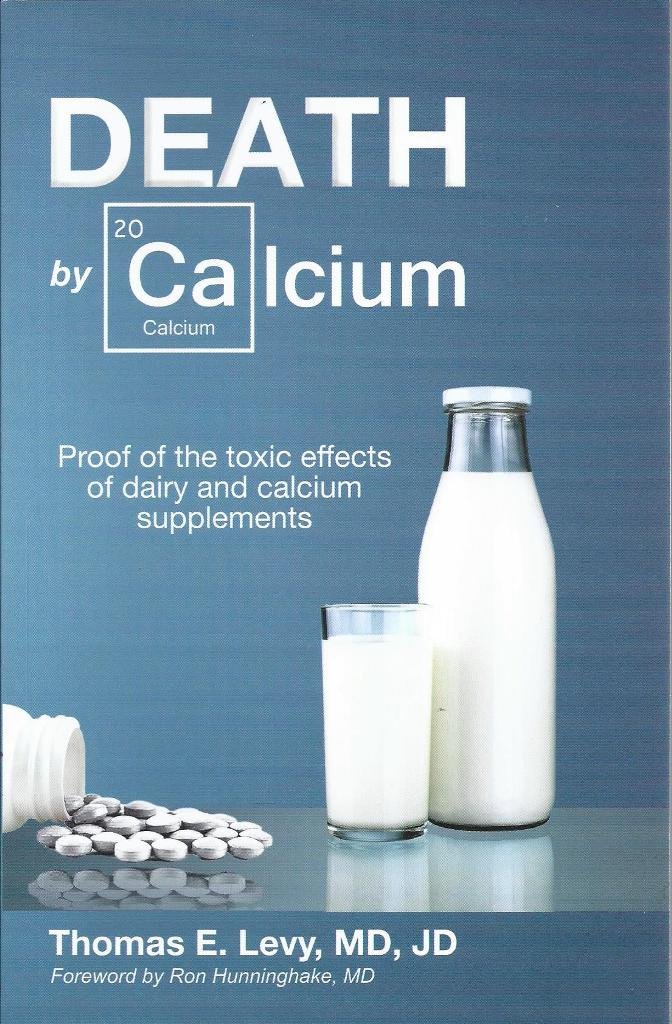
In Death by Calcium, Thomas E. Levy discusses what he describes as a paradoxical imbalance in calcium distribution, where calcium may gradually be depleted from bones while simultaneously accumulating in soft tissues and arteries.[6]
Importantly, these discussions do not suggest that calcium itself is harmful. Calcium remains fundamentally essential to human physiology.[1] Rather, they highlight the importance of regulation and biological balance.
This has become one of the major shifts occurring within modern nutritional science. The focus is no longer centered entirely on whether people are consuming enough nutrients. Increasingly, scientists are asking whether nutrients are reaching the right places, in the right amounts, under the right physiological conditions.
That distinction may ultimately prove far more important.
The controversy that reignited public debate
Public interest surrounding calcium metabolism intensified further following the publication of Death by Calcium by Thomas E. Levy.[6]
The book questioned conventional assumptions surrounding calcium supplementation and argued that excessive or poorly regulated calcium intake may contribute to unwanted calcification within the body.
Its provocative title generated considerable debate across both medical and wellness communities.
Some researchers criticized aspects of the book as overly simplified, while others acknowledged that it helped raise broader public awareness about calcium regulation and vascular calcification.[5][6]
Regardless of differing opinions surrounding its conclusions, the discussion reflected a growing recognition that calcium metabolism is more complex than earlier health messaging suggested.
Importantly, the evolving scientific conversation is not about fear or avoidance. Calcium deficiency remains a serious health concern in many populations worldwide.[1]
Instead, the discussion is increasingly centered around context, absorption, regulation, and metabolic balance.
This is where the concept of bioavailability becomes especially important.
Why bioavailability may matter more than dosage
One of the most important developments in modern nutritional science is the growing emphasis on bioavailability — the proportion of a nutrient that successfully enters circulation and becomes available for biological use.[3]
Simply consuming a nutrient does not guarantee that the body can absorb or utilize it effectively.
Calcium absorption can vary significantly depending on digestive health, age, stomach acidity, nutrient interactions, metabolic status, and formulation type.[1][3]
Certain forms of calcium demonstrate higher absorption efficiency than others, while supporting nutrients such as vitamin D and magnesium play critical roles in maintaining calcium balance.[1][2]
Vitamin D helps facilitate intestinal calcium absorption.[1] Magnesium contributes to enzymatic regulation and proper calcium metabolism. Vitamin K2 has increasingly been studied for its potential involvement in directing calcium toward bones and away from soft tissues.
Without sufficient coordination between these systems, increasing calcium intake alone may not produce the intended physiological outcome.
This broader understanding reflects a major shift within nutritional science itself. Researchers are increasingly moving away from simplistic “single nutrient” thinking and toward systems-based models that recognize how nutrients interact through highly interconnected biological networks.
The body is not a passive container where nutrients automatically create predictable outcomes. It is an adaptive system constantly regulating absorption, transport, storage, signaling, and metabolic balance in response to changing physiological conditions.[3]
“What matters is not only what enters the body, but what the body can meaningfully use.”

Antiorbital Ionic Calcium (AIC) Therapy: A Different Approach to Calcium Delivery
Antiorbital Ionic Calcium (AIC) Therapy represents a shift from conventional calcium supplementation toward a system designed to deliver calcium in its free ionic form (Ca²⁺), the only biologically active state the body can directly use. Developed by the Calcium & Bone Health Institute (CBHI) in Canada, this approach is based on proprietary Antiorbital bonding technology, which stabilises weak chemical interactions between calcium ions and carbonate groups, allowing calcium to remain loosely bound and readily dissociable upon ingestion.

Unlike standard calcium supplements such as calcium carbonate, which require gastric acid and enzymatic breakdown before absorption can occur, AIC is engineered so that calcium ions are rapidly released in ionic form under physiological conditions. This is achieved through the stabilisation of anti-bonding orbital structures—normally unstable molecular interactions that have been engineered to remain functional at room temperature—resulting in a highly reactive yet stable delivery system.
A key advantage of this structure is its significantly enhanced solubility compared to conventional calcium forms, allowing faster interaction with biological systems. Once ingested, calcium does not depend on strong stomach acid, Vitamin D3, or peptide-mediated transport, as it is already available in a near-ionic state. This enables absorption through passive diffusion and osmotic gradients across the gastric lining, rather than relying on energy-dependent active transport mechanisms.
In practical terms, this reduces dependence on digestive efficiency, which is often compromised with age or reduced gastric function. By bypassing traditional cofactor requirements, the system aims to provide a more direct pathway for calcium availability within the body.
Beyond skeletal health, calcium balance plays a central role in cellular signalling and intracellular regulation. As these systems become disrupted over time, calcium dysregulation may contribute to broader degenerative and age-related processes.
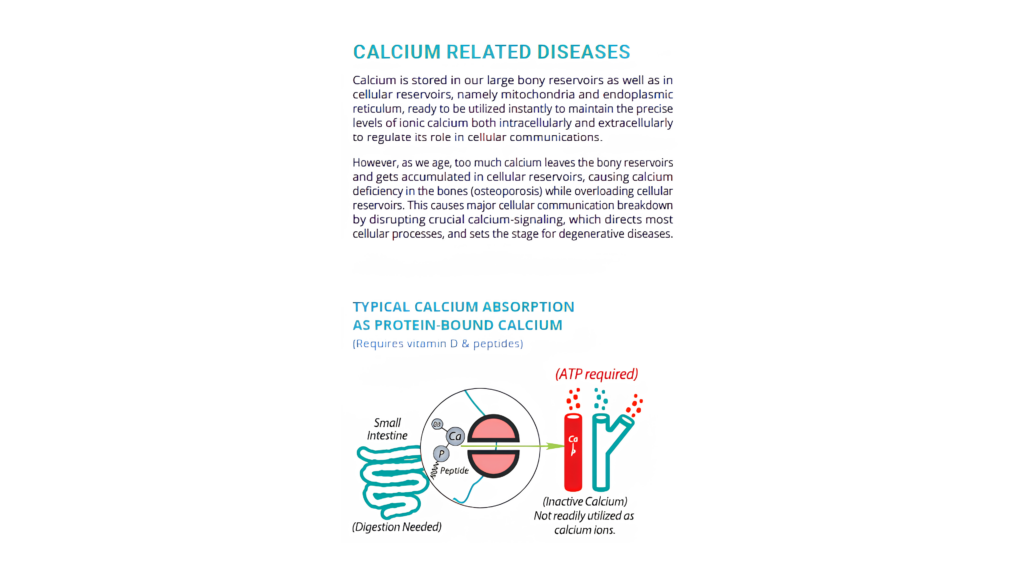
Beyond absorption, AIC is also a functional ionic signaling system. Because calcium ions play a critical role in cellular communication and hormonal regulation, even small shifts in serum ionic calcium levels may influence biological processes such as bone remodelling. In this model, calcium is not only a structural mineral but also an active signalling molecule involved in maintaining systemic homeostasis.
In biological systems, only ionic calcium (Ca²⁺) is physiologically active and immediately available for cellular processes, highlighting its importance far beyond structural bone support alone.
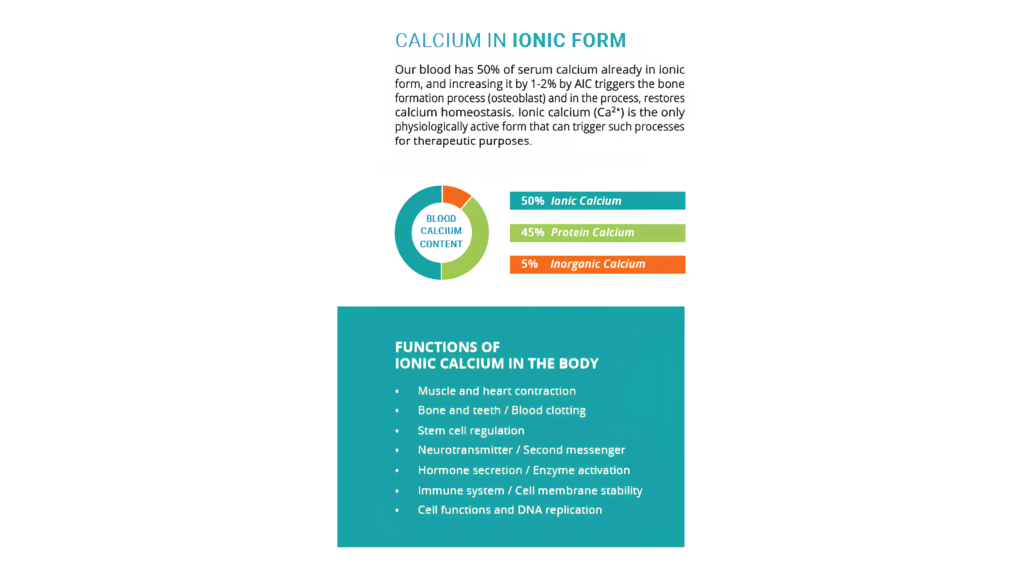
Because ionic calcium is already present in a bioavailable state, it may interact more rapidly with physiological systems involved in calcium homeostasis, cellular signalling, and metabolic regulation.
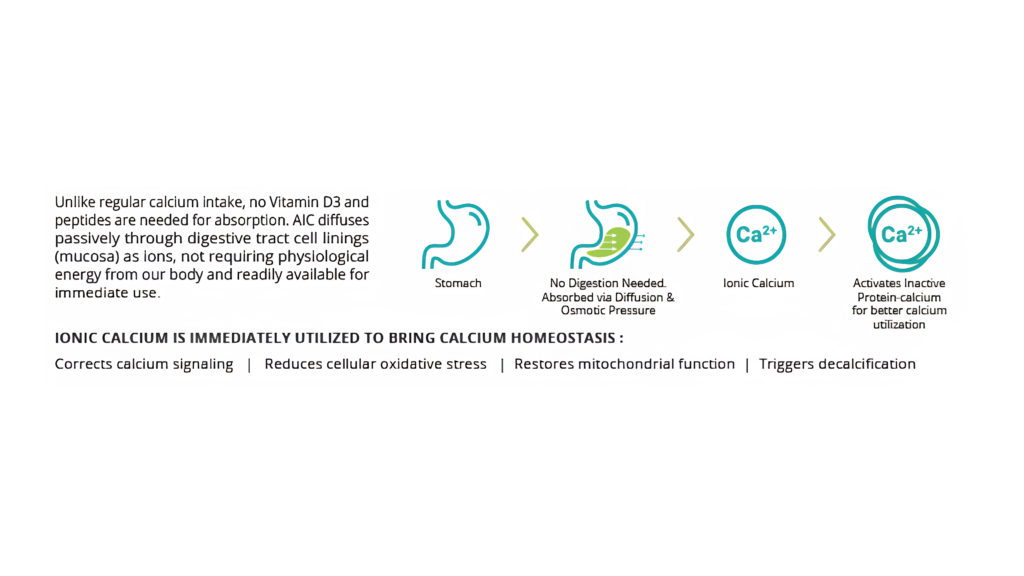
The illustration above demonstrates a simplified model of calcium absorption and utilization. By entering the body in an ionized form, calcium may become more readily available for physiological functions related to cellular communication, energy production, and calcium balance. While calcium intake remains important, modern nutritional science increasingly recognizes that absorption efficiency and bioavailability play a critical role in determining overall effectiveness.
For readers who want to explore how this approach is applied in practice, more information about Antiorbital Ionic Calcium (AIC) Therapy can be found through the official Bio Meadows overview here.
Why modern wellness culture often oversimplifies nutrition
Modern wellness culture often favors simple answers to highly complex biological problems.
Weak bones become “take more calcium.”
Fatigue becomes “take more iron.”
Low immunity becomes “take more vitamin C.”
But human physiology rarely functions according to isolated nutrient equations.
The body operates through overlapping systems involving absorption, inflammation, hormones, cellular signaling, digestive integrity, metabolic resilience, and nutrient interaction.[3]
Addressing one nutrient without considering the broader physiological environment may not always produce meaningful or sustainable results.
This may help explain why some individuals continue struggling with health concerns despite extensive supplementation routines. In many cases, the issue may not simply involve deficiency, but rather how efficiently the body is regulating and utilizing nutrients over time.
Increasingly, modern research suggests that long-term health may depend less on megadoses and more on biological balance itself.
Conclusion: shifting the conversation beyond intake alone
Calcium remains one of the most essential minerals in human physiology.[1]
But the science surrounding calcium has evolved considerably beyond the traditional idea that “more calcium equals stronger bones.”
Modern research increasingly suggests that long-term health outcomes may depend on a much broader network involving absorption, bioavailability, nutrient synergy, metabolic regulation, and biological placement throughout the body.[3][5]
This does not diminish calcium’s importance. If anything, it reveals how sophisticated calcium metabolism truly is.
The future of nutritional science may ultimately depend less on isolated supplementation strategies and more on understanding how the body regulates nutrients as part of an interconnected biological system.
Because in the end, health is rarely determined only by what we consume.
It is determined by what the body is actually able to absorb, regulate, and use effectively.
Author Note
This insight was researched and developed by the Bio Meadows editorial team using peer-reviewed scientific literature, biomedical references, and publicly available clinical research sources.
REFERENCES
[1] National Institutes of Health (NIH) – Calcium Fact Sheet for Health Professionals
https://ods.od.nih.gov/factsheets/Calcium-HealthProfessional/
[2] Harvard T.H. Chan School of Public Health – Calcium and Health
https://nutritionsource.hsph.harvard.edu/calcium/
[3] Drug Absorption – StatPearls – NCBI Bookshelf
https://www.ncbi.nlm.nih.gov/books/NBK557405/
[4] Anatomy, Abdomen and Pelvis, Small Intestine – StatPearls – NCBI Bookshelf
https://www.ncbi.nlm.nih.gov/books/NBK459366/
[5] Vascular Calcification and Cardiovascular Risk Research – PubMed
https://pubmed.ncbi.nlm.nih.gov/
[6] Death by Calcium by Thomas E. Levy
[7] Nutritional Medicine Institute – Bioavailability and Nutrient Absorption
https://www.nmi.health/