
Peptides matter because they sit at the intersection of two things every longevity-minded reader already cares about: how the body repairs itself, and how that capacity changes with age. Interest in peptide science has grown sharply over the past decade, driven by advances in synthetic biology, a deeper understanding of cellular signalling, and a broader shift in medicine away from blunt interventions and towards precise, targeted ones. For readers, the appeal is not a promise of reversal or repair on demand — the evidence is far more measured than that — but a genuinely fascinating reframing of what “healing” actually is: not a passive default state, but an active, regulated process that depends on molecular instructions passing constantly between cells.
Most people think about their health in terms of things they can see and measure — the food on a plate, the minutes spent exercising, the supplements lined up on a kitchen shelf. Yet underneath all of that sits something far less visible and far more telling: a constant exchange of biochemical information, cell to cell, that determines whether a strained tendon knits back together properly, whether skin retains its structure after a wound, or whether muscle tissue rebuilds itself stronger after exertion. This exchange does not happen by accident. It is coordinated, timed, and remarkably precise — and the molecules responsible for relaying many of these instructions are peptides.
For most of the twentieth century, peptides were treated as little more than fragments — pieces of proteins, interesting mainly for what they revealed about the larger molecules they came from. That view has changed considerably. Insulin, discovered in the 1920s, was among the first peptides to be understood as something with its own independent biological authority: not a leftover, but a hormone capable of altering how the entire body manages energy. Insulin is a 51-amino-acid-long peptide hormone that helps cells take in sugars from food to use for metabolism and store in the liver, and it became the first peptide ever manufactured synthetically, entering clinical use for type 1 diabetes in the early 1920s. [1] That discovery quietly established a principle still shaping medicine a century later: that short chains of amino acids could carry biological instructions every bit as significant as those carried by far larger molecules.
The body does not heal by default — it heals by communication
There is a comfortable assumption built into how most of us think about recovery: that the body simply “knows” how to repair itself, the way a phone automatically restarts after a crash. In reality, repair is closer to a negotiation. When tissue is damaged, a cascade of signals has to be sent, received, and acted upon — instructing nearby cells to multiply, instructing blood vessels to extend into the area, instructing inflammation to rise and then, just as critically, instructing it to subside again. None of this is automatic in the way we tend to imagine. It depends on signalling systems that can fail, weaken with age, or become miscalibrated by chronic stress, poor metabolic health, or disease.

“The body’s ability to repair itself depends on more than raw materials. It depends on communication.”
Peptides are one of the principal vocabularies in that communication system. They are not simply structural leftovers waiting to be reassembled into larger proteins; many of them are purpose-built messages, shaped specifically to be recognised by particular cellular receptors and to trigger particular downstream effects.
From amino acids to instructions: the basic chemistry
To understand why peptides behave this way, it helps to start with the building blocks. Amino acids are small organic molecules — twenty of them occur naturally in the human body — that link together through a chemical bond called a peptide bond. There are twenty naturally occurring amino acids that constitute the building blocks of proteins, and they react under the loss of water to form an extremely stable peptide bond. [5] When a handful of amino acids link together, the result is a peptide; when the chain grows much longer, scientists generally start calling it a protein, though the boundary is somewhat arbitrary. The main difference is that peptides are shorter strings of amino acids than proteins, with most scientists referring to chains of over 100 amino acids as proteins, while peptides typically run from around two to one hundred amino acids in length. [1]
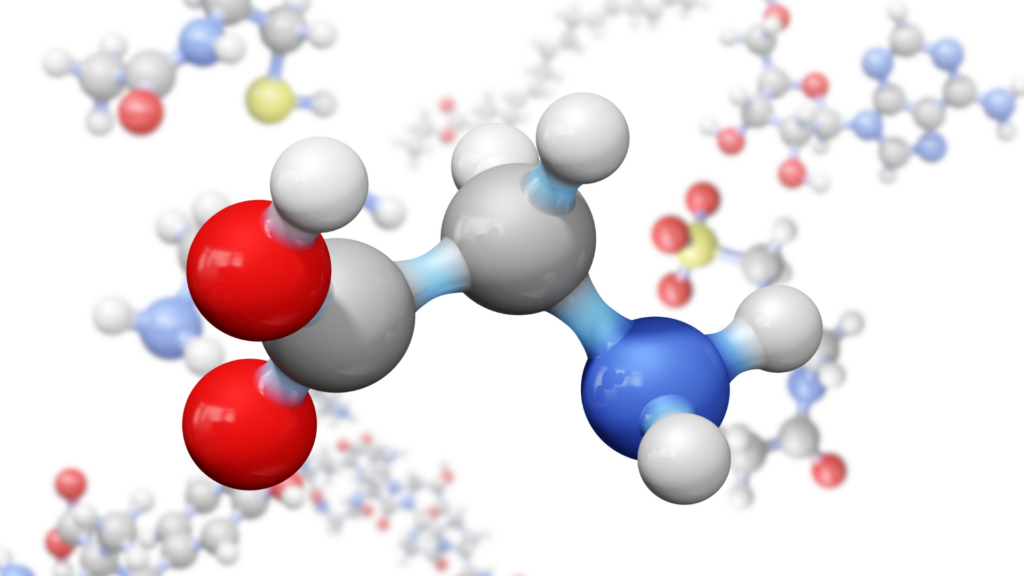
What makes this distinction more than semantic is shape and function. A protein like collagen is mostly architectural — it forms the scaffolding of skin, tendon, and bone. A peptide, by contrast, is often built for recognition rather than structure. Its size allows it to fold into a precise three-dimensional shape that fits, almost like a key, into a specific receptor on the surface of a target cell. Peptides bind to cellular receptors through molecular recognition, where the peptide’s three-dimensional structure and charge distribution complement the receptor’s binding pocket, following an induced fit model in which both ligand and receptor undergo conformational adjustments. [4] Once that binding occurs, the receptor changes shape internally, setting off a chain reaction inside the cell — activating enzymes, altering the concentration of molecules such as calcium or cyclic AMP, and ultimately changing what genes the cell switches on or off. The receptor’s conformational change activates effector proteins that generate second messengers, which amplify the signal and activate downstream pathways that ultimately alter gene expression, protein synthesis, or cellular behaviour. [2][4]
“Peptides are not building blocks alone — they are biological instructions.”
Many of the receptors involved belong to a vast family known as G protein-coupled receptors, embedded in the outer membrane of nearly every cell type in the body. Once a peptide binds its target receptor, the receptor changes conformation and activates heterotrimeric G proteins. [2] Others work through receptor tyrosine kinases, a different class of surface receptor that, once activated, recruits a set of adaptor proteins and launches its own internal signalling cascade. Some peptide-mediated signals operate through receptor tyrosine kinases, where ligand binding induces receptor dimerisation and autophosphorylation, and the resulting phosphotyrosine residues serve as docking sites for adaptor proteins that activate downstream cascades. [4] The specific receptor a peptide engages, and the pathway it triggers, depends almost entirely on the peptide’s exact sequence and folded shape — which is part of why even small chemical modifications to a peptide can dramatically change its biological effect. Biological signalling networks are not linear; extensive cross-talk has been documented between receptor pathways, meaning a single peptide can influence several interconnected systems at once. [3][4]
Repair, renewal, and the skin’s structural code
Nowhere is this signalling role more visible — quite literally — than in skin. Skin’s firmness and elasticity depend on a dense scaffolding of collagen and elastin, both of which decline steadily from early adulthood onward. Collagen itself is too large a molecule to be absorbed intact when consumed, which is one reason researchers have focused on collagen-derived peptides: smaller fragments that the body can take up and that appear, in laboratory studies, to send their own signals back to skin cells, encouraging them to produce more of the structural proteins they would otherwise make less of with age.
The clinical picture, while still developing, has become more substantial than it once was. A 2025 randomised, double-blind, placebo-controlled trial involving women aged 35 to 55 found that bioactive collagen peptides, taken over a sustained period, improved skin’s mechanical properties, building on evidence that hydrolysed collagen offers enhanced absorption and functionality compared with collagen in its native form. [7] Separate trial data involving tuna-derived collagen peptides reported that an eight-week course produced significant increases in skin hydration, elasticity, and density, alongside a reduction in water loss through the skin, compared with a placebo group, with laboratory work on human skin cells showing dose-dependent increases in collagen and elastin production alongside a reduction in senescent, or aged, cells. [6] None of this amounts to a reversal of skin ageing — and reputable researchers are careful not to frame it that way — but it does support the idea that specific peptide sequences can measurably influence how skin cells behave, not merely how skin looks from the outside.
Repair beyond the skin: tissue, tendon, and the architecture of healing
The signalling role of peptides extends well beyond cosmetic concerns. Wound healing is a multi-stage process — clotting, inflammation, new tissue formation, and remodelling — and researchers have become increasingly interested in how naturally occurring and laboratory-developed peptides influence each stage. Peptides possess intrinsic antimicrobial, anti-inflammatory, angiogenic, and pro-regenerative properties, allowing them to regulate the cellular and molecular events that occur across all stages of healing, which is part of why they have become a serious focus in wound-care research, particularly for chronic wounds that resist conventional treatment. [8][12] Researchers in this field also emphasise that effective repair depends on more than the presence of a single peptide: it depends on the broader microenvironment around the wound, including how peptides are delivered, how long they remain active at the site, and how they interact with the surrounding tissue. [12]
Some of the most studied peptides in this space act primarily by encouraging the growth of new blood vessels — a process called angiogenesis that is essential for delivering oxygen and nutrients to healing tissue. One such peptide, derived from a naturally occurring gastric protective protein, has been shown in laboratory and animal research to promote tissue repair through activation of angiogenic signalling pathways important for new blood vessel formation, which matters because ageing tissue typically shows decreased vascularisation and a weakened angiogenic response, contributing to slower healing. [9][10] It is worth being direct about the limits here: the strongest human evidence available for this particular peptide currently consists of small pilot studies involving roughly a dozen to several dozen participants — encouraging, but far from conclusive, and a useful reminder that animal and laboratory findings do not automatically translate into proven human outcomes. [9]
The hormonal route: peptides and the body’s own growth signals
A separate, well-established area of peptide research concerns the hormones that regulate growth and recovery directly. Growth hormone itself is released from the pituitary gland in a pulsing, tightly regulated pattern, and a class of peptides known as growth hormone secretagogues works not by replacing that hormone but by prompting the pituitary to release more of its own, within its natural feedback loops. These peptides promote pulsatile release of growth hormone that remains subject to the body’s negative feedback, which may help prevent the excessive hormone levels associated with direct supplementation. [11] Clinical review of this peptide class has found that, used appropriately, they may improve growth velocity in children with deficiencies, stimulate appetite, improve lean mass in wasting conditions and in obese individuals, reduce bone turnover, and improve sleep, with available studies indicating that they are generally well tolerated, albeit with some concern around effects on blood sugar regulation. As with much of this field, the caveat matters as much as the finding: few long-term, rigorously controlled studies have yet examined the safety and efficacy of this peptide class, which is precisely why it remains an area of active rather than settled science. [11]
“In many ways, health is a conversation occurring between trillions of cells.”
Why this field is accelerating now
Peptide science is not new — the structural distinction between amino acids, peptides, and proteins has been understood for the better part of a century. What has changed is the precision with which researchers can now design, synthesise, and test peptides for highly specific biological effects, and the sheer scale of interest this has generated across disciplines. Peptides mediate an estimated fifteen to forty per cent of all protein-protein interactions in the body, placing them at the centre of processes ranging from DNA replication to metabolic regulation, and more than eighty peptide drugs have now received regulatory approval, with insulin remaining the pioneering example of a therapeutic peptide used at scale. [13] That track record has encouraged closer scientific attention to peptides involved in tissue regeneration, metabolic health, and the biological hallmarks of ageing — ambitions that sit squarely within the broader fields of regenerative medicine and longevity science, even as most individual applications remain under active investigation rather than settled clinical practice.
This is also where peptide research intersects with a wider shift happening across medicine: away from one-size-fits-all interventions and towards approaches that target specific molecular pathways with much greater precision. A peptide, by virtue of its size and specificity, can often be designed to influence one particular receptor or signalling cascade with comparatively little interference elsewhere in the body — a property that makes it an attractive tool for researchers trying to move medicine in a more targeted, individualised direction.
It would be a mistake, though, to treat this as a settled science with established consumer applications. One copper-binding peptide associated with skin and tissue repair has been used in topical formulations and was submitted with sufficient supporting information to the FDA for approval as recently as September 2023, illustrating both the genuine progress in the field and how recent — and how carefully regulated — much of this progress still is. [10] The broader category of peptide-based treatment, sometimes referred to as peptide therapy, has consequently drawn growing clinical interest across specialties, even as practitioners caution that it remains an emerging area rather than a standard, one-size-fits-all treatment. [14] Researchers reviewing the broader category of peptides in gerontology have concluded, fairly, that therapeutic peptides offer mechanistically diverse approaches to several recognised hallmarks of ageing, but that investigational peptides require rigorous validation through well-designed clinical trials before claims about health span extension can be considered established. [9]
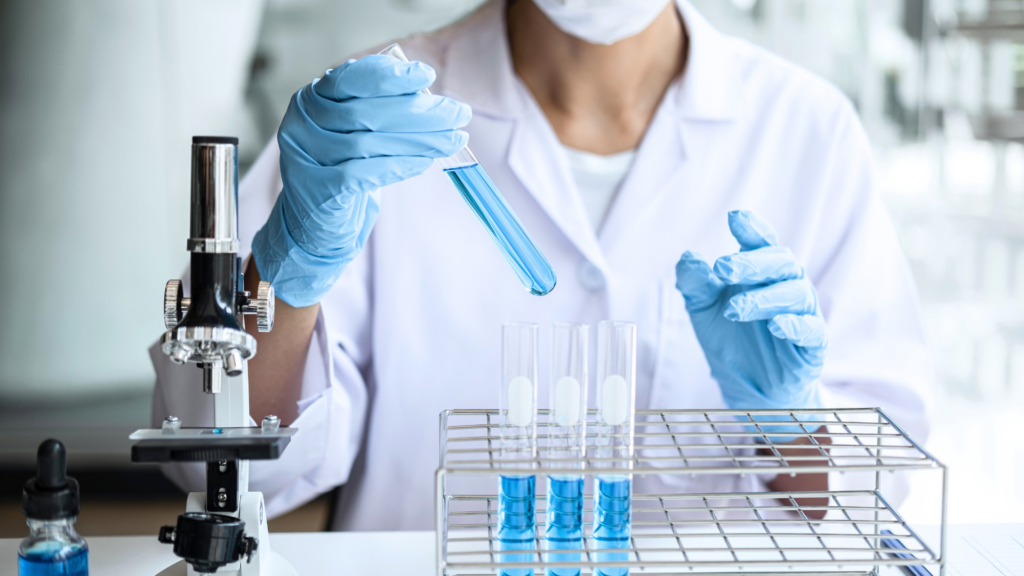
A more precise way of understanding the body
Step back from the individual mechanisms — the receptors, the signalling cascades, the specific peptides under study — and a broader picture comes into focus. The body does not simply contain materials; it runs an extraordinarily intricate communication network that determines how those materials are used, repaired, and replaced. Vitamins and minerals matter because they supply raw inputs. Peptides matter because they help determine what the body actually does with them.
This is, in many ways, the deeper story behind the growing scientific interest in peptides: not a single breakthrough compound, but a steadily clearer view of how cellular communication governs nearly everything we associate with healthy ageing — repair, resilience, and the body’s capacity to adapt to stress and damage over time. As tools for studying and designing peptides become more sophisticated, that view is likely to keep sharpening. The body’s internal messaging system has been operating, largely unnoticed, for as long as multicellular life has existed. Science is only now beginning to read its language with any real fluency — and what it is finding suggests there is still a great deal left to translate.
Author Note
This insight was researched and developed by the Bio Meadows editorial team using peer-reviewed scientific literature, biomedical references, and publicly available clinical research sources.
REFERENCES
[1] WebMD. What Are Peptides? Reviewed 2026.
https://www.webmd.com/a-to-z-guides/what-are-peptides
[2] Posner, B.I. Cellular signalling: Peptide hormones and growth factors. PubMed.
https://pubmed.ncbi.nlm.nih.gov/20478429/
[3] Bachem. Peptides & Amino Acids for Beginners: Understanding the Basics.
https://www.bachem.com/knowledge-center/peptides-amino-acids-for-beginners-understanding-the-basics/
[4] Transactivation of G protein-coupled receptors (GPCRs) and receptor tyrosine kinases (RTKs): Recent insights using luminescence and fluorescence technologies. PMC, NIH.
https://www.ncbi.nlm.nih.gov/pmc/articles/PMC7960640/
[5] Introduction to Protein Structure (educational reference on amino acid structure and the peptide bond). arXiv. https://arxiv.org/pdf/2307.02169
[6] Morakul, B., Teeranachaideekul, V., Wongrakpanich, A., Leanpolchareanchai, J. The evidence from in vitro primary fibroblasts and a randomized, double-blind, placebo-controlled clinical trial of tuna collagen peptides intake on skin health. Journal of Cosmetic Dermatology, 2024. https://pubmed.ncbi.nlm.nih.gov/39075819/
[7] Wang, Y., Zhu, W., Luo, W., Ma, Y., Zhou, Y. The Sustained Effects of Bioactive Collagen Peptides on Skin Health: A Randomized, Double-Blind, Placebo-Controlled Clinical Study. Journal of Cosmetic Dermatology, 2025.
https://www.ncbi.nlm.nih.gov/pmc/articles/PMC12661388/
[8] Peptides in wound healing: A comprehensive review of their roles, challenges, and hydrogel-based delivery systems. PMC, NIH. https://pmc.ncbi.nlm.nih.gov/articles/PMC12828160/
[9] Mavrych, V., Shypilova, I., Bolgova, O. Therapeutic peptides in gerontology: mechanisms and applications for healthy aging. Frontiers in Aging, 2026. https://www.frontiersin.org/journals/aging/articles/10.3389/fragi.2026.1790247/full
[10] Local and Systemic Peptide Therapies for Soft Tissue Regeneration: A Narrative Review. PMC, NIH. https://pmc.ncbi.nlm.nih.gov/articles/PMC11426299/
[11] Sigalos, J.T., Pastuszak, A.W. The Safety and Efficacy of Growth Hormone Secretagogues. PMC, NIH, 2017. https://pmc.ncbi.nlm.nih.gov/articles/PMC5632578/
[12] Hao, Z.-W., Zhang, Z.-Y., Wang, Z.-P., et al. Bioactive peptides and proteins for tissue repair: microenvironment modulation, rational delivery, and clinical potential. Military Medical Research, 2024.
https://link.springer.com/article/10.1186/s40779-024-00576-x
[13] Leveraging Machine Learning Models for Peptide-Protein Interaction Prediction (on the scale of peptide drug approvals and protein–protein interactions). arXiv.
https://arxiv.org/pdf/2310.18249
[14] UPMC HealthBeat. What Is Peptide Therapy? Reviewed January 2026.